Handouts and Instructional Materials
Throughout our series of pilot workshops, our team developed a many handouts, instructions, and templates to support the creation of various types of expressive paper forms. These handouts are intended to guide one through the construction process, while also pointing to the unique affordances and constraints of that particular paper form.
Copyable materials can also be found in our public facing Zines and Expressive Forms Samples and Instructions Google Drive Folder. We welcome your use — and obviously, remix of these materials — in your own endeavors!
Zines and Booklets
One-page Zines
The one-page zine is probably the most familiar and accessible paper form we experimented with in our workshop. They are easily folded from one sheet of paper, can be easily scanned and reproduced, and make for a great building block in conversations about aggregation.
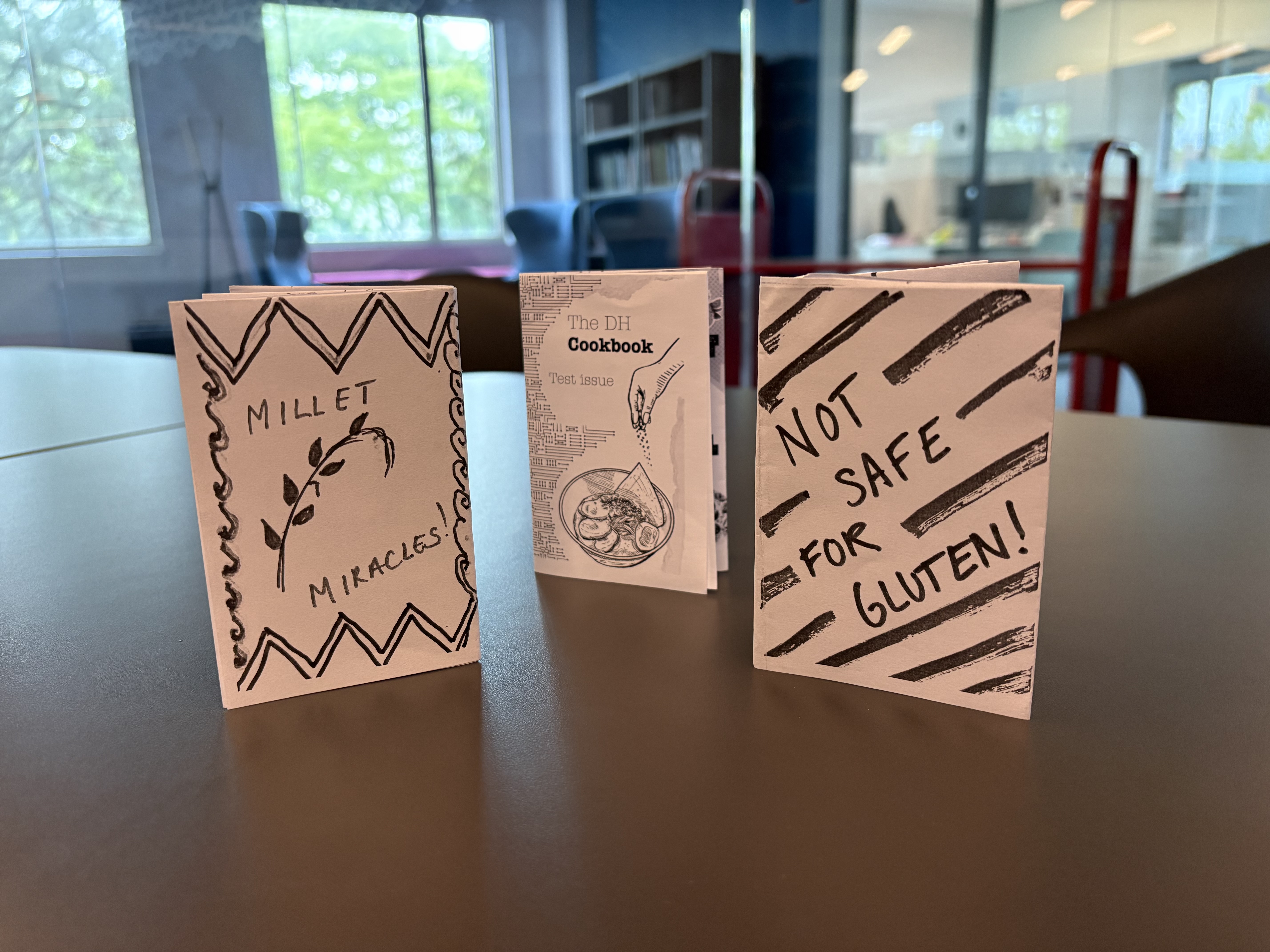
What we find interesting about the one-page zine:
- they lend themselves well to linear narrative
- but they are also double sided; what might be concealed or revealed on the back side of the page?
- their accessibility: easy to print, easy to mail, easy to carry
Download One-page Zine Instructions
Accordion Zine
Accordion fold zines are a common expressive paper form, often used in both zine and artists’ book communities. They can be made with just one piece of paper or by joining joined multiple sheets of paper that are made with a series of peak and valley folds.
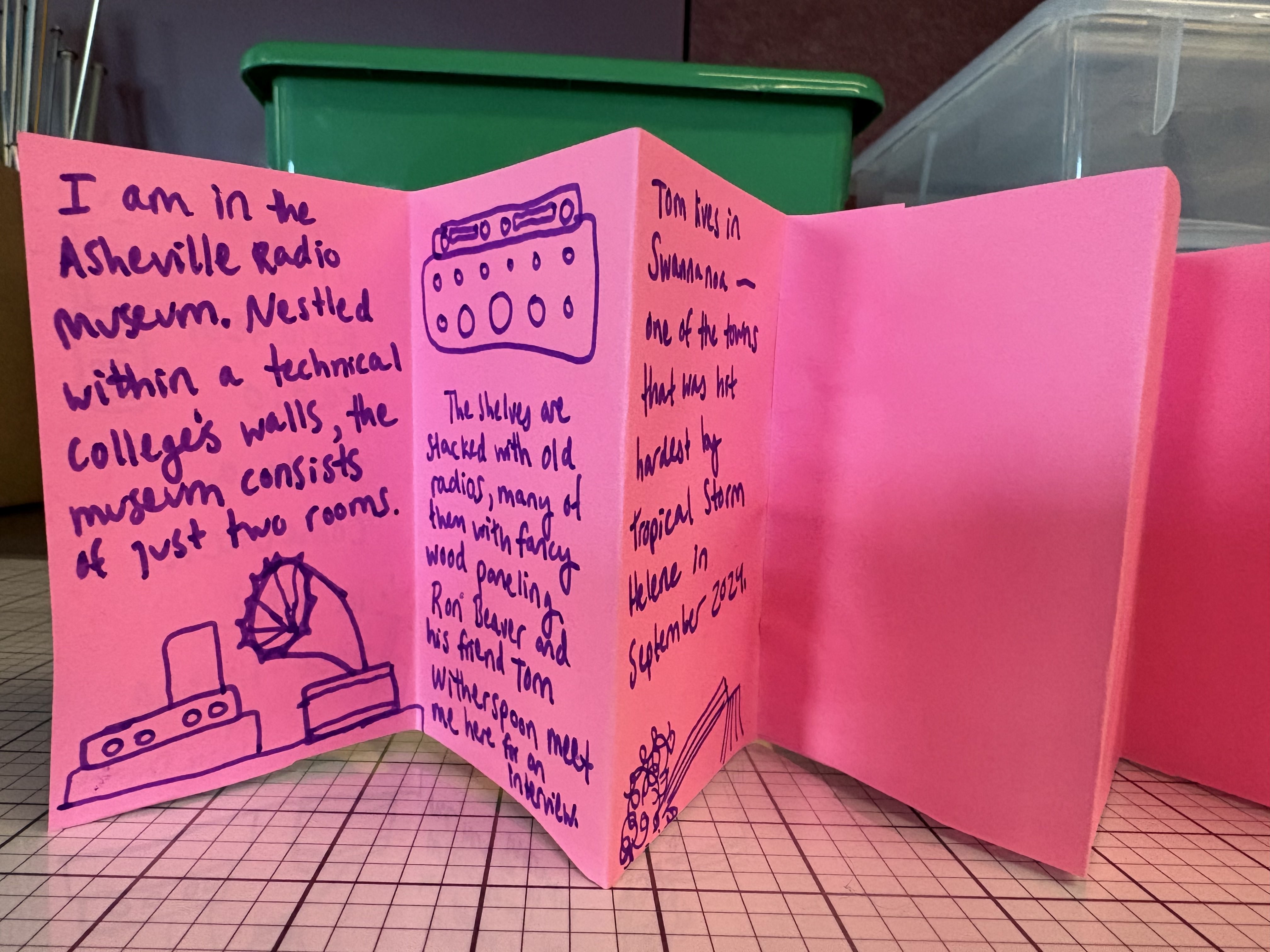
What we find interesting about the accordion zine:
- it can be easily adapted for linear narratives
- there are multiple options for reading an accordion zine (is it composed of individual panels or one big panel?)
- the peak and valley folds can conceal and reveal information
- it has multiple, different states of stasis (it can be folded up like a book or standing up)
- it conveys movement, opening, elasticity
Download Accordion Zine Instructions
Lotus Book
Lotus books (or star books, depending on how you fold them) are made with a bookbinding technique where folded squares of paper that are glued together creating three-dimensional, flower-like structures. David Mitchell traces one origin of the lotus book fold to ‘Zhe zhi tu shuo’ (Illustrated Paperfolding), Volume 1, compiled by Gui Shaolie and published in 1914.
IMAGE PLACEHOLDER
What we find interesting about the accordion zine:
- *
Download Lotus Book Instructions
Flexagons
Hexaflexagon
6-Square Tetraflexagon
Technical Credits - CollectionBuilder
This digital collection is built with CollectionBuilder, an open source framework for creating digital collection and exhibit websites that is developed by faculty librarians at the University of Idaho Library following the Lib-Static methodology.
Using the CollectionBuilder-CSV template and the static website generator Jekyll, this project creates an engaging interface to explore driven by metadata.